


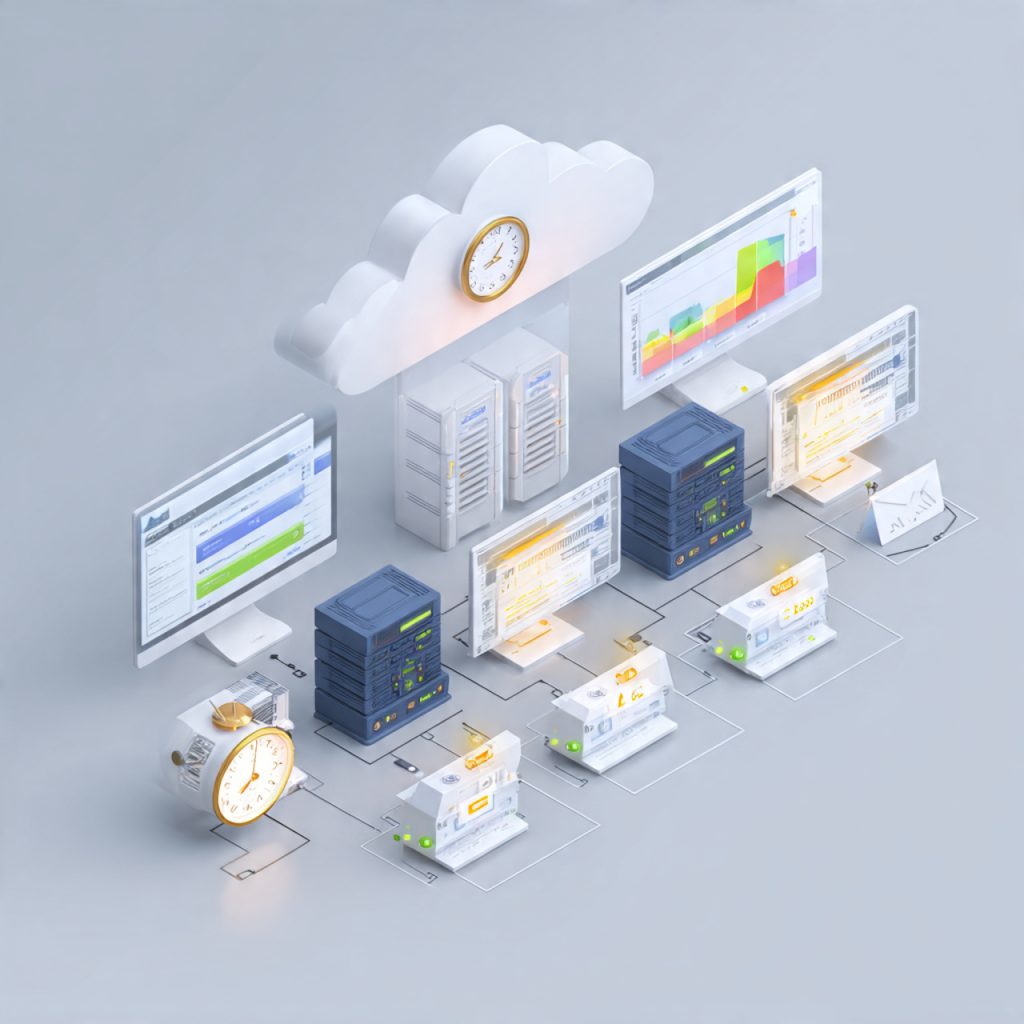





You've been thinking about moving to the cloud for months now Maybe your servers are aging out, or your IT costs keep climbing Perhaps a competitor just launched something you can't match with your current setup Whatever brought you here, you're probably asking yourself: "Is this going to be worth the headache?"
We're Web Artist Pro, and we've been helping businesses in Folsom and across the United States answer that question since 2019 Some of those businesses took the leap Others decided to wait Both choices were right because we helped them figure out what actually made sense for their situation, not ours
Let's talk about your cloud options honestly No jargon No pressure Just real answers
Talk to an Expert
Here's what most companies don't tell you: cloud migration is messy Not because the technology is bad, but because every business is different That WordPress site running on a server in your closet? Easy to move That custom ERP system built in 2009 with no documentation? That's a different story
We've migrated over 200 applications in the past five years Some took two weeks Others took six months The difference wasn't always size it was complexity, dependencies, and how much risk the business could tolerate
Before we touch anything, we need to understand your current setup. What applications are running? Which databases talk to each other? Who needs access to what? This discovery phase usually takes 1-2 weeks and saves months of problems later.
Everything that can go wrong, we document. Then we plan around it. Rollback procedures, parallel systems, backup plans. During one migration last year, we hit an unexpected database dependency at 2 AM. Because we'd planned for it, we rolled back, regrouped, and completed the migration the next weekend.
Your users shouldn't notice the difference after migration. We test in staging environments, run parallel systems, and validate data integrity before cutting over. One client processes 50,000 transactions daily we tested with 100,000 to be safe.
Most of our clients experience less than two hours of downtime during their entire migration. We schedule critical operations during your slowest hours, and we're online monitoring everything throughout the process.
The first month after migration is crucial. We monitor closely, optimize performance, and adjust resources based on real usage. This is when we typically find those 35-40% cost savings everyone talks about.
Let me be honest about AWS: it's powerful, but it's also overwhelming Amazon offers over 200 services, and they add new ones monthly Nobody uses all of them Nobody should
Last month, a Folsom manufacturing company called us Their AWS bill had grown from $2,000 to $8,000 monthly in six months They thought they were doing something wrong Turns out, they had 15 servers running 24/7 that only got used during business hours That's not a mistake it's just how AWS works unless you configure it properly
We fixed it in a week Their bill dropped to $3,200 They're actually using more resources now, just smarter
Every AWS account we set up includes:
We've worked with healthcare companies (HIPAA), payment processors (PCI-DSS), and financial services (SOC 2) Compliance isn't optional for them, and we build it in from day one
We've sat through AWS training courses Most focus on passing certification exams That's fine, but it doesn't teach you how to fix a production issue at 3 AM
Our training is different We use your actual AWS environment We create problems and show your team how to solve them We teach the stuff that matters:
Training costs $75 per hour Most teams need 8-12 hours to get comfortable, spread over a few weeks so they can practice between sessions
EC2, Lambda, ECS, EKS, Fargate these all do similar things in different ways We help you pick based on what your team can manage, not what sounds coolest in a webinar
A startup asked us to build everything serverless with Lambda because they'd read it was the future We did a cost analysis For their specific workload, traditional EC2 instances cost 60% less They went with EC2 Sometimes boring is better
AWS pricing makes sense when you understand it, but getting there takes time Reserved instances, savings plans, spot instances, on-demand each has its place We've spent years figuring out which approach works for different situations
One trick: most businesses can save 30-50% immediately by analyzing their actual usage patterns and right-sizing instances You don't need a t3.xlarge if your CPU usage never hits 20%
Database migrations scare people, and they should Your data is your business We've moved everything from simple MySQL databases to complex Oracle setups with years of stored procedures
Our approach: parallel running We migrate the data, then run both systems simultaneously for a week Same transactions, both databases We compare results constantly Only when everything matches perfectly do we cut over
Lambda functions are incredible for certain workloads APIs that get sporadic traffic, scheduled tasks, event-driven processing They're terrible for other things, like long-running jobs or consistent high-volume traffic
We built an entire image processing system for a real estate company using Lambda They upload photos, Lambda processes them, resizes them, optimizes them Costs $12 monthly because it only runs when needed That same job on a full-time server would cost $80+ monthly
Let me be honest about AWS: it's powerful, but it's also overwhelming Amazon offers over 200 services, and they add new ones monthly Nobody uses all of them Nobody should
Last month, a Folsom manufacturing company called us Their AWS bill had grown from $1,999 to $7,999 monthly in six months They thought they were doing something wrong Turns out, they had 15 servers running 24/7 that only got used during business hours That's not a mistake it's just how AWS works unless you configure it properly
We fixed it in a week Their bill dropped to $3,199 They're actually using more resources now, just smarter
EC2, Lambda, ECS, EKS, Fargate these all do similar things in different ways We help you pick based on what your team can manage, not what sounds coolest in a webinar
A startup asked us to build everything serverless with Lambda because they'd read it was the future We did a cost analysis For their specific workload, traditional EC2 instances cost 60% less They went with EC2 Sometimes boring is better
We've sat through AWS training courses Most focus on passing certification exams That's fine, but it doesn't teach you how to fix a production issue at 3 AM
Our training is different We use your actual AWS environment We create problems and show your team how to solve them We teach the stuff that matters:
Training costs $75 per hour Most teams need 8-12 hours to get comfortable, spread over a few weeks so they can practice between sessions
AWS pricing makes sense when you understand it, but getting there takes time Reserved instances, savings plans, spot instances, on-demand each has its place We've spent years figuring out which approach works for different situations
One trick: most businesses can save 30-50% immediately by analyzing their actual usage patterns and right-sizing instances You don't need a t3.xlarge if your CPU usage never hits 20%
Database migrations scare people, and they should Your data is your business We've moved everything from simple MySQL databases to complex Oracle setups with years of stored procedures
Our approach: parallel running We migrate the data, then run both systems simultaneously for a week Same transactions, both databases We compare results constantly Only when everything matches perfectly do we cut over
Azure's migration tools are solid:
We use all of them, but tools only get you 80% there The last 20% testing, validation, optimization that's where experience matters
Lambda functions are incredible for certain workloads—APIs that get sporadic traffic, scheduled tasks, event-driven processing They're terrible for other things, like long-running jobs or consistent high-volume traffic
We built an entire image processing system for a real estate company using Lambda They upload photos, Lambda processes them, resizes them, optimizes them Costs $12 monthly because it only runs when needed That same job on a full-time server would cost $80+ monthly
Every AWS account we set up includes:
We've worked with healthcare companies (HIPAA), payment processors (PCI-DSS), and financial services (SOC 2) Compliance isn't optional for them, and we build it in from day one
If you're running Windows servers, Active Directory, and Office 365, Azure is probably your best option Not because it's better than AWS (they're different), but because it integrates with what you already have
We migrated a Sacramento law firm to Azure last year They had:
Azure made sense because everything just worked together Their users logged in with the same credentials Their SharePoint site connected to Azure AD automatically Their document system needed zero changes
Could we have done it with AWS? Sure Would it have cost more time and money? Absolutely
We Connect Everything
Azure AD syncs with your on-premises Active Directory Your users have one password Your IT team manages everything from one place When someone leaves the company, you disable their account once, and they lose access everywhere
Some data can't leave your building regulations, compliance, or just company policy Azure handles this better than anyone with Azure Stack and Azure Arc
We set up a hybrid system for a medical practice Patient records stay on-premises (HIPAA requirements), but their scheduling system, billing, and backups run in Azure It works seamlessly, and they stay compliant
Got a .NET application from 2012? It probably still works, but it costs too much to run and can't scale when you need it to
We take these applications and modernize them:
One client had a customer portal built in 2010 Slow, crashed under load, cost $1,200 monthly to run We modernized it Now it's faster, handles 10x the traffic, and costs $400 monthly
Azure's migration tools are solid:
We use all of them, but tools only get you 80% there The last 20% testing, validation, optimization that's where experience matters
We charge $125 per hour for Azure consulting Most migration projects run $4,999-$24,999 depending on complexity We can give you a fixed price quote after understanding your environment
Google built their cloud platform to solve Google-scale problems If you're processing massive amounts of data, building machine learning models, or running containerized applications, GCP deserves a close look
We're not going to tell you GCP is perfect for everyone It's not Their support isn't as mature as AWS Their third-party integrations aren't as extensive as Azure But for certain workloads, they're unmatched
BigQuery Changes How You Think About Data
Traditional data warehouses require:
BigQuery requires:
We replaced a client's entire data warehouse $4,000 monthly in servers, plus a database administrator at $90,000 yearly with BigQuery Their costs dropped to $600 monthly Queries run faster The DBA now focuses on analysis instead of infrastructure
Google offers pre-trained AI models through simple APIs:
A customer service company wanted to analyze support ticket sentiment "Are our customers getting angrier?" They didn't have data scientists or machine learning expertise
We connected their ticketing system to Google's Natural Language API Now every ticket gets a sentiment score automatically They track trends over time and flag angry customers for immediate attention Total development time: 2 days Monthly cost: $15
Google invented Kubernetes Their managed Kubernetes service, GKE, is the best available If you're building microservices or containerizing applications, GKE makes it straightforward
We built a SaaS platform for a client using GKE It auto-scales from 3 containers during quiet periods to 50+ during peak usage They only pay for what they use, and deployment takes minutes instead of hours
We build data pipelines that:
One pipeline we built processes 2 million events daily for an e-commerce company They see real-time analytics on sales, inventory, and customer behavior The entire pipeline runs for about $200 monthly
Every GCP project starts with an assessment:
Based on that, we propose a solution Sometimes it's GCP Sometimes it's a mix of platforms Sometimes it's staying where you are and just optimizing
Contact us for GCP consulting pricing Projects typically range from $2,999-$29,999 depending on scope
Most American companies don't think about Alibaba Cloud until they try to expand into China Then they realize: nothing else really works there
AWS has limited presence in China Azure has some, but with restrictions Google Cloud is essentially unavailable If you want to serve customers in mainland China, Alibaba Cloud is your realistic option
It's Your Gateway to China
Serving customers in China isn't just about hosting—it's about compliance You need ICP licensing You need local payment integration (Alipay, WeChat Pay) You need to understand Chinese data regulations
We've helped three companies expand into Asia in the past two years Each time, Alibaba Cloud was part of the solution because nothing else satisfied Chinese requirements
Alibaba isn't just a cloud provider They run the largest e-commerce platforms in Asia Their cloud integrates directly with Taobao, Tmall, and AliExpress
If you're selling physical or digital products in Asia, this integration matters Inventory management, payment processing, logistics it's all connected
Alibaba Cloud often costs less than Western alternatives, especially for bandwidth and storage For a company serving primarily Asian users, the cost difference can be significant
Their AI models trained on Chinese language and user behavior perform better for Asian audiences Sentiment analysis, language translation, speech recognition it's all optimized for the market you're serving
We help with:
Alibaba Cloud projects are quoted individually based on your specific needs and timeline
Talk to an Expert
Migration is the exciting part. Ongoing management is what determines long-term success. These services keep your cloud environment secure, fast, and cost-effective.
Real-time monitoring for up to 5 servers/instances, basic CPU/memory/disk metrics, and standard dashboards.
Up to 20 servers/instances, advanced metrics (network traffic, application performance), custom dashboards, and integrations (e.g., Grafana, Prometheus).
Initial assessment for up to 3 services, basic best practices (MFA, strong passwords, security groups).
Advanced penetration testing, intrusion detection, compliance audits.
Configuration for one application, basic scaling policies.
Predictive scaling, load balancing, ongoing monitoring.
Customized hands-on training with real-world scenarios.
Architectural design, migration planning, security consulting.
Daily full backups, 7-day retention, basic recovery procedures.
Hourly backups, 30+ day retention, disaster recovery testing, restore to alternative locations.
Detailed cost analysis, ways to effectively cut your cloud expenditure.
Continuous cost monitoring, automated optimization tools.
Sync two platforms for a single app, initial setup.
Complex integrations, multi-cloud management tools.
We're based in Folsom, California We've been doing this for five years We've completed over 200 cloud migrations and trained more than 500 people
But honestly, that's not why you should choose us
Our Track Record
In five years:
But numbers don't tell the whole story We're most proud of clients who call us two years later to say, "It's still working great, and we haven't thought about infrastructure in months"
We Tell You When Cloud Isn't the Answer
Three months ago, a retail company wanted to migrate everything to AWS Their current setup cost $3,200 monthly and worked fine We did the analysis Moving to AWS would cost $4,100 monthly and take 2-3 months of effort
We told them to stay where they were They appreciated the honesty When they're actually ready to move, they'll call us
We Don't Have a Preferred Vendor
We're certified in AWS, Azure, GCP, and Alibaba Cloud We make money whether you choose any of them or none of them Our recommendation is based on what's best for your situation
Sometimes that's a mix of platforms Sometimes it's staying on-premises with some cloud services Sometimes it's a full migration
We're Actually Local
Need to meet in person? We're in Folsom Want to grab coffee and talk through your options? We'll meet you anywhere in the Sacramento area
Most of our work happens remotely, but being local matters when you want to meet face-to-face
We Don't Lock You In
Everything we build, we document All credentials go to you We train your team to manage things themselves if that's what you want
Many clients start with us managing everything, then gradually take over as their team learns We support both approaches
At Web Artist Pro, we specialize in the delivery of bespoke cloud services and consultancy for businesses of all sizes. We help organizations scale with minimum friction, innovate with ease cloud migrations, and expert training on AWS, Google Cloud, Azure, and Alibaba Cloud.
Everyone Our smallest client is a solo consultant running a WordPress site Our largest is a logistics company with 50+ servers processing millions of transactions daily
Size doesn't matter as much as whether we're a good fit If you need help with cloud stuff and you're willing to be honest about your budget and timeline, we can probably help
That's one of our most common requests Companies migrate to the cloud expecting to save money, then their bills keep growing
We typically find 30-50% in savings through:
We plan for problems Every migration includes:
We've never had a migration fail We've had migrations where we hit problems, rolled back, regrouped, and completed successfully on the next attempt
Security isn't something we add at the end It's built into every service we provide:
For regulated industries (healthcare, finance, payment processing), we have specific experience with HIPAA, PCI-DSS, and SOC 2 requirements
Usually within a week after our initial conversation
Here's the typical process:
Simple projects might begin in days Complex migrations need planning time
Simple migrations (a few servers, straightforward architecture): 2-4 weeks from start to finish
Medium complexity (databases with dependencies, multiple applications): 1-3 months
Complex enterprise migrations (legacy systems, compliance requirements, extensive testing): 3-6 months
We've done one-week rush migrations We've done year-long enterprise projects It depends entirely on your specific situation
Not right away Our services can cover your cloud management needs while your team learns
As you grow, we'll help you decide when hiring makes sense We've even helped clients write job descriptions and interview candidates
Absolutely We love teaching Many clients prefer this approach because:
We customize training to your team's current knowledge and your specific environment
Multi-cloud is increasingly common Some good reasons:
We design multi-cloud architectures regularly It adds complexity, but for the right reasons, it's worth it
Yes Our managed service clients get priority support with typical response times under 15 minutes for critical issues
We also do emergency consulting for businesses facing urgent problems who aren't current clients Call us If we can help, we will
Then we'll tell you that We've talked several businesses out of cloud migrations because the math didn't work or the timing wasn't right
We'd rather have you as a future client when the time is actually right than push you into something that doesn't make sense now
Let's Talk About Your Situation
We're not going to pressure you We're not going to claim we're the only company that can help you We're just going to listen, ask questions, and give you our honest assessment
Sometimes that means recommending a migration Sometimes it means suggesting you wait Sometimes it means pointing you toward a different solution entirely
Sign up for my newsletter to get latest updates. Do not worry, we will never spam you.
WhatsApp us